
Thai Flower Names That Sound Like Secret Messages
Five Thai flower names with beautiful meanings—love, endurance, remembrance, Mother’s Day jasmine, and ceremonial marigolds—plus Chiang Mai tips for markets and gift cards.
Flowers can communicate without words, but in Thailand some Thai flower names already sound like complete messages.
A name may express love, remembrance, endurance, or respect. Sometimes the meaning comes directly from the Thai words. Other times it grew from how the flower is used in ceremonies, garlands, and everyday life.
Here are five Thai flower names with especially beautiful meanings—and how you can echo those messages when you send flowers in Chiang Mai.
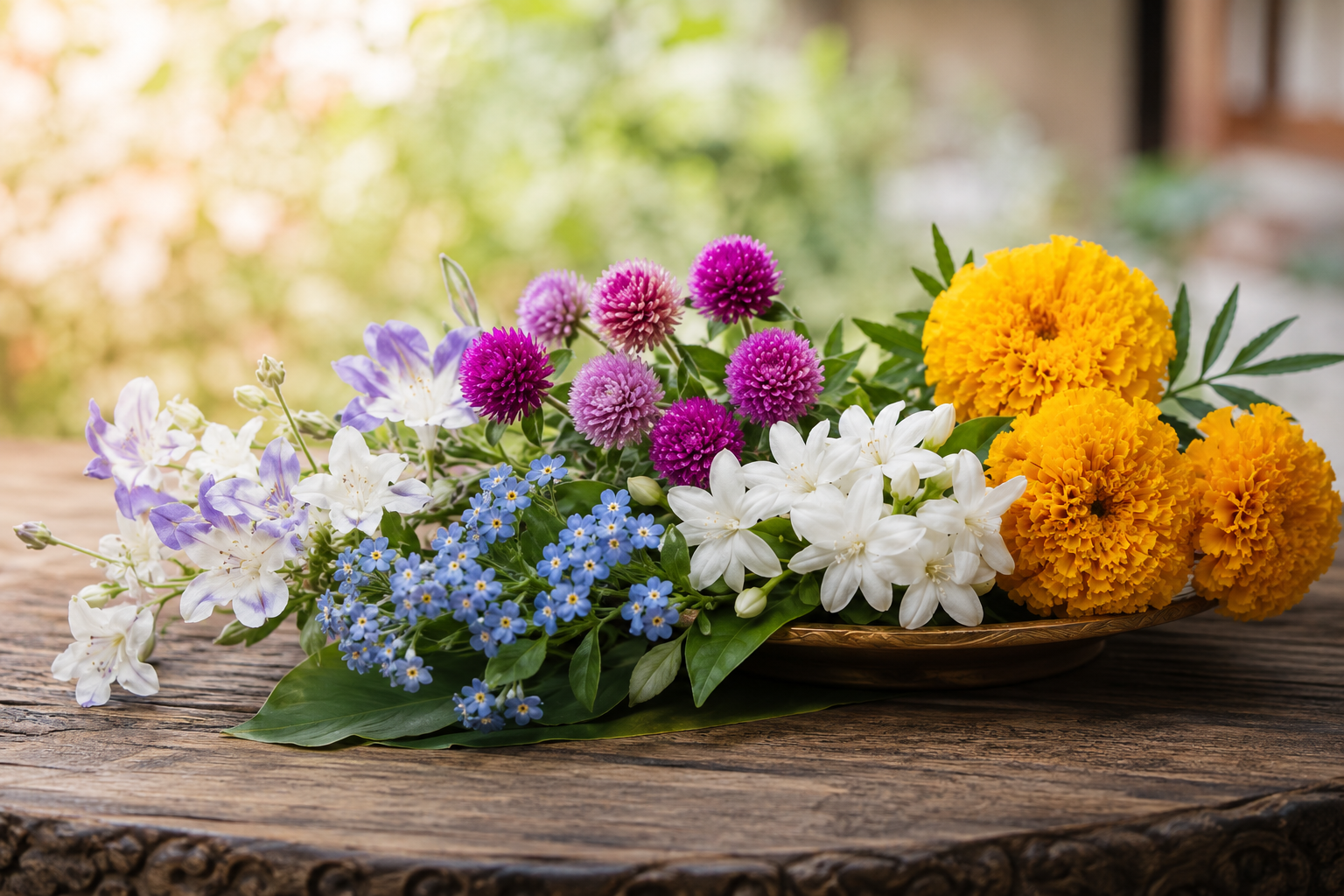
1. Dok Rak — the flower of love
Thai name: ดอกรัก
Pronunciation: Dok Rak
Scientific name: Calotropis gigantea
Literal meaning: Love flower
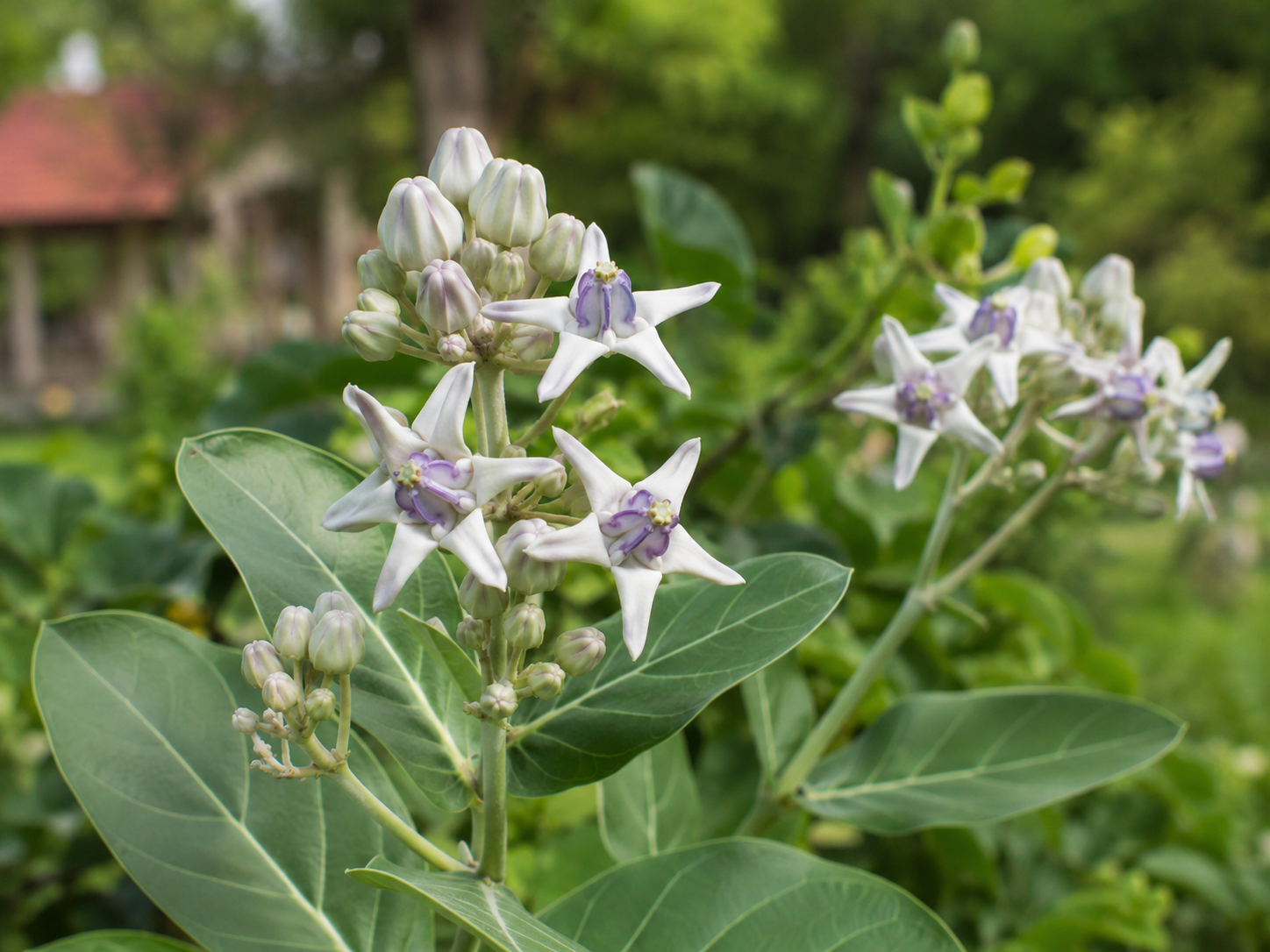
The Thai word rak means “love,” which makes Dok Rak one of the most romantically named flowers in Thailand.
The blooms are usually white or pale purple, with a distinctive star-like shape. They are strong enough to thread and are commonly used in traditional Thai garlands and ceremonial decorations.
In everyday Chiang Mai life, Dok Rak is easier to buy than to spot growing wild. You will often find it at Warorot Market (Kad Luang), especially near the corner where flower shops cluster. In traffic, vendors also sell hanging car charms for the rear-view mirror—usually a jasmine circle with two soft Dok Rak braids hanging below.
Because of its name, Dok Rak is naturally associated with affection, connection, and lasting relationships. It can communicate a simple message:
“My love remains with you.”
Dok Rak is more common in Thai garlands and ceremonial flower work than in modern Western-style bouquets. If you want that same romantic message in a delivery bouquet, a classic rose arrangement is an easy modern echo.
2. Baan Mai Roo Roi — the flower that never fades
Thai name: ดอกบานไม่รู้โรย
Pronunciation: Baan Mai Roo Roi
Scientific name: Gomphrena globosa
English name: Globe amaranth
Literal meaning: Blooming without knowing how to fade
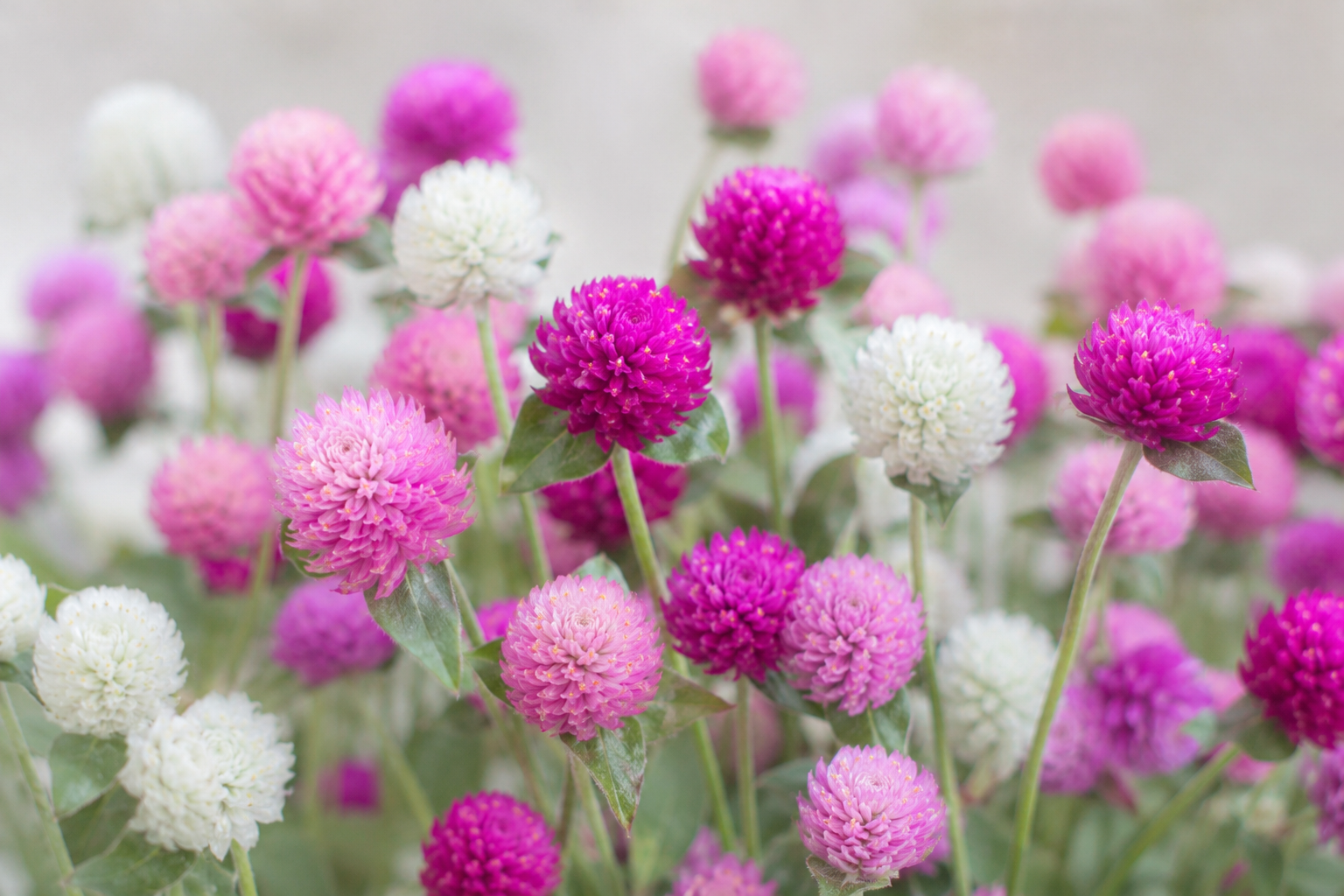
This may be one of the most poetic flower names in the Thai language.
The phrase can be divided into three parts:
- Baan — to bloom
- Mai roo — does not know how
- Roi — to wither or fade
Together, the name describes a flower that does not know how to fade.
Globe amaranth keeps its shape and colour for a long time, even after drying. That quality helped it become associated with endurance, long life, and affection that does not disappear.
Around Chiang Mai’s countryside and quieter neighbourhoods, you can see it growing along sidewalks and roadsides—small, soft, colourful balls that look a little like popcorn. Locals sometimes nibble them for fun, and the cute, soft blooms are often tucked into candy gifts as decoration. Flower shops rarely sell them as a standalone stem; more often they appear as a sweet accent inside a bouquet.
In Thailand, it has traditionally been used in garlands, religious offerings, and ceremonial displays. It is also commonly seen in students’ Wai Khru arrangements, where flowers are presented to teachers as a sign of respect.
As a romantic message, Baan Mai Roo Roi can mean:
“May our love never fade.”
3. Ya Luem Chan — don’t forget me
Thai name: อย่าลืมฉัน
Pronunciation: Ya Luem Chan
English name: Forget-me-not
Literal meaning: Don’t forget me
Ya luem chan is a direct Thai translation of “forget-me-not.”
The name sounds like a personal request from someone who is leaving, waiting, or hoping to remain in another person’s memory. It can express:
- Remembrance
- Loyalty
- Missing someone
- Love across a long distance
- A relationship that should not be forgotten
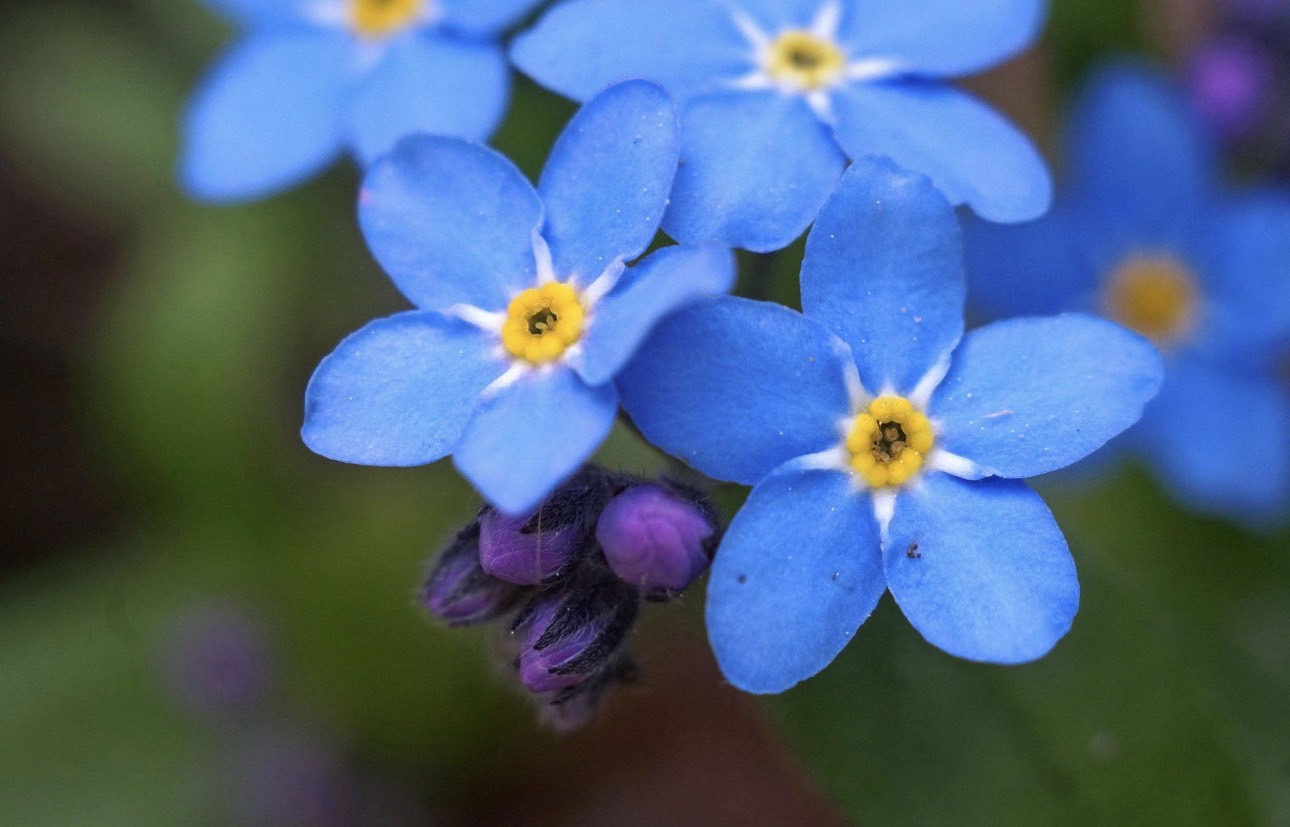
The traditional forget-me-not is usually a small blue flower from the genus Myosotis, with soft petals and a tiny yellow centre.
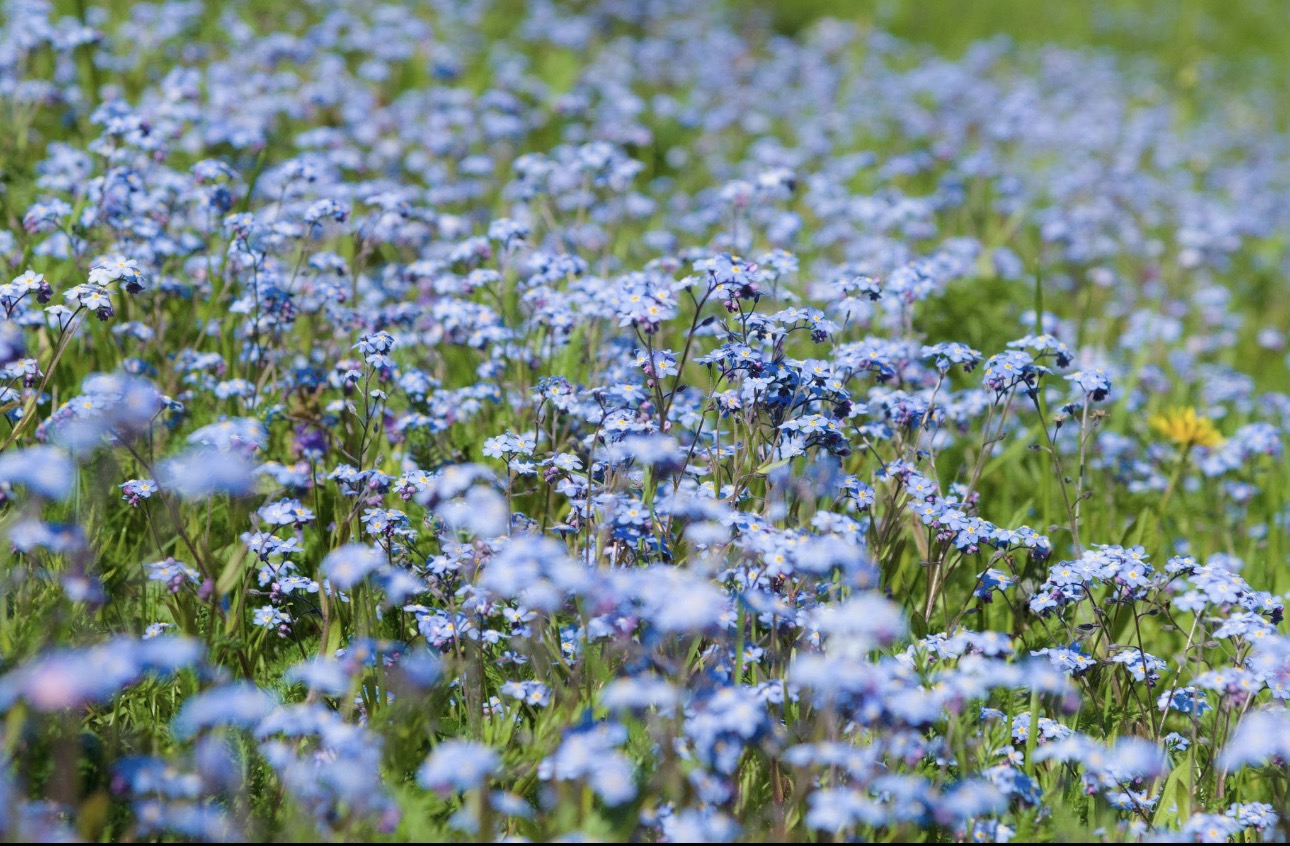
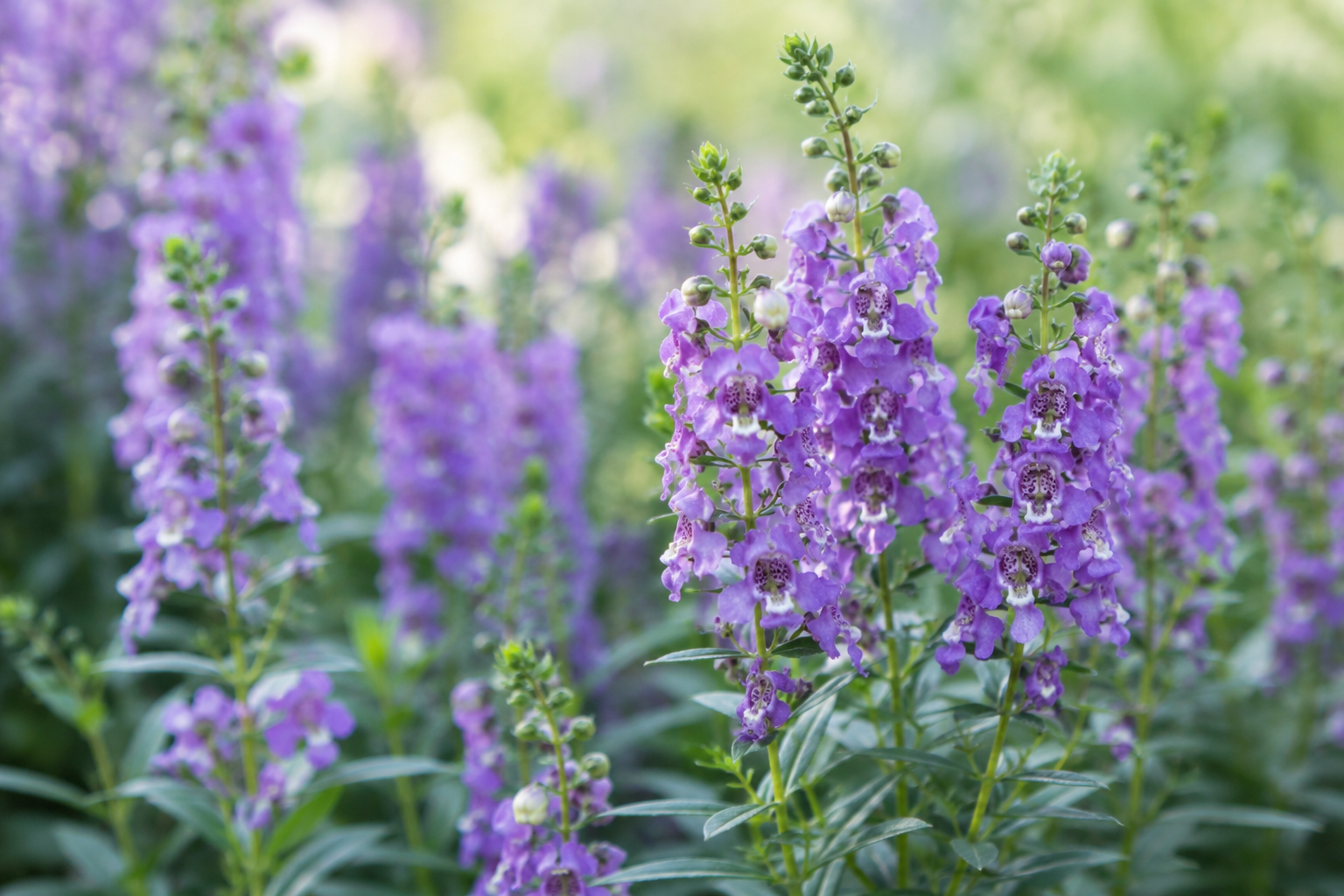
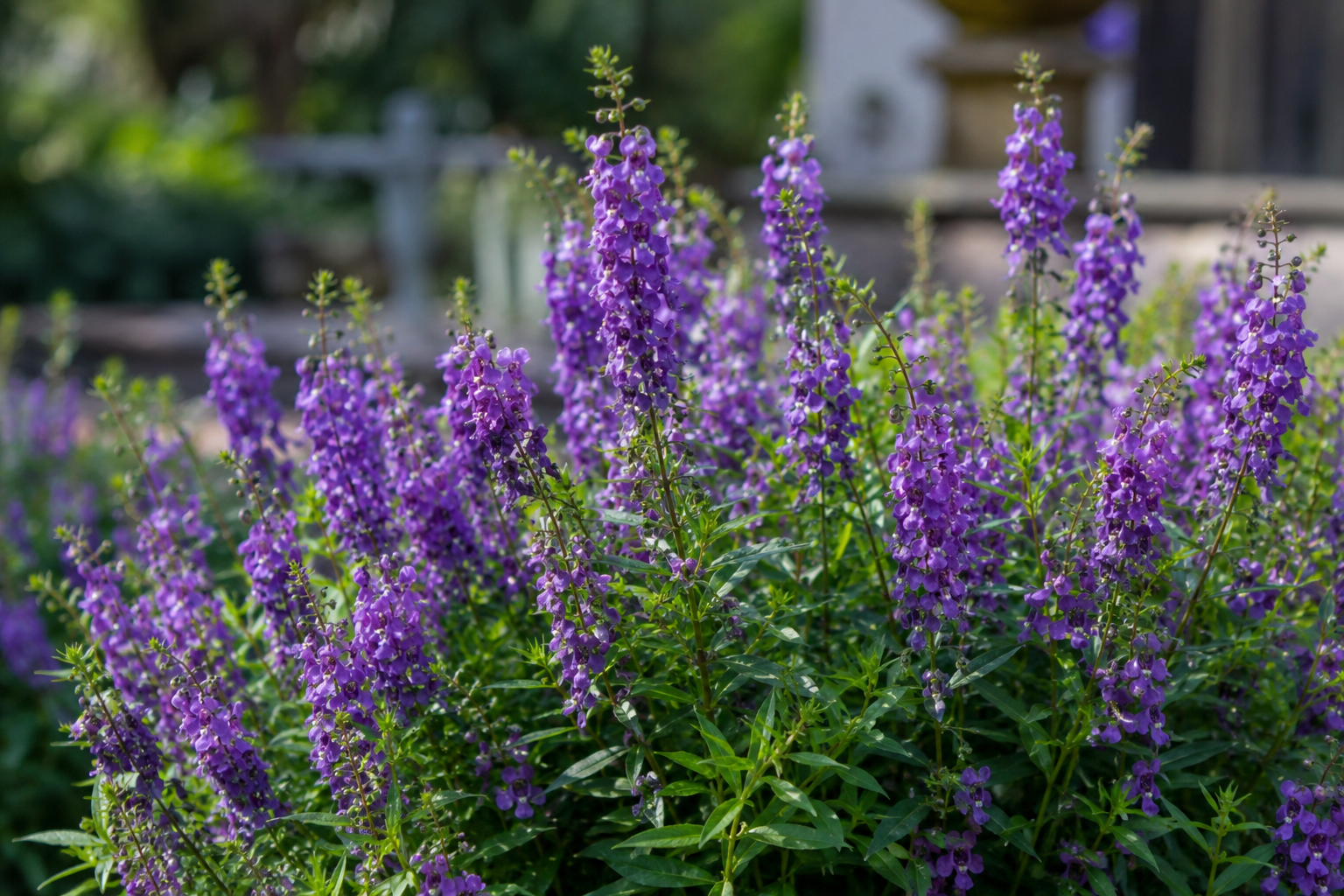
Visitors to Thailand may also encounter Waew Wichian, or Angelonia, being informally described as the “Thai forget-me-not.”
These are not botanically the same flower. Angelonia and the true forget-me-not belong to different plant families, so the names should not be used as if they describe the same species. The comparison comes mainly from their small, delicate, and often blue-purple flowers.
The message behind the name remains beautifully simple:
“Even when we are apart, please remember me.”
A soft rose bouquet with a short card works well when you want that same feeling of gentle closeness.
4. Mali — a flower of a mother’s pure love
Thai name: ดอกมะลิ
Pronunciation: Dok Mali
English name: Jasmine
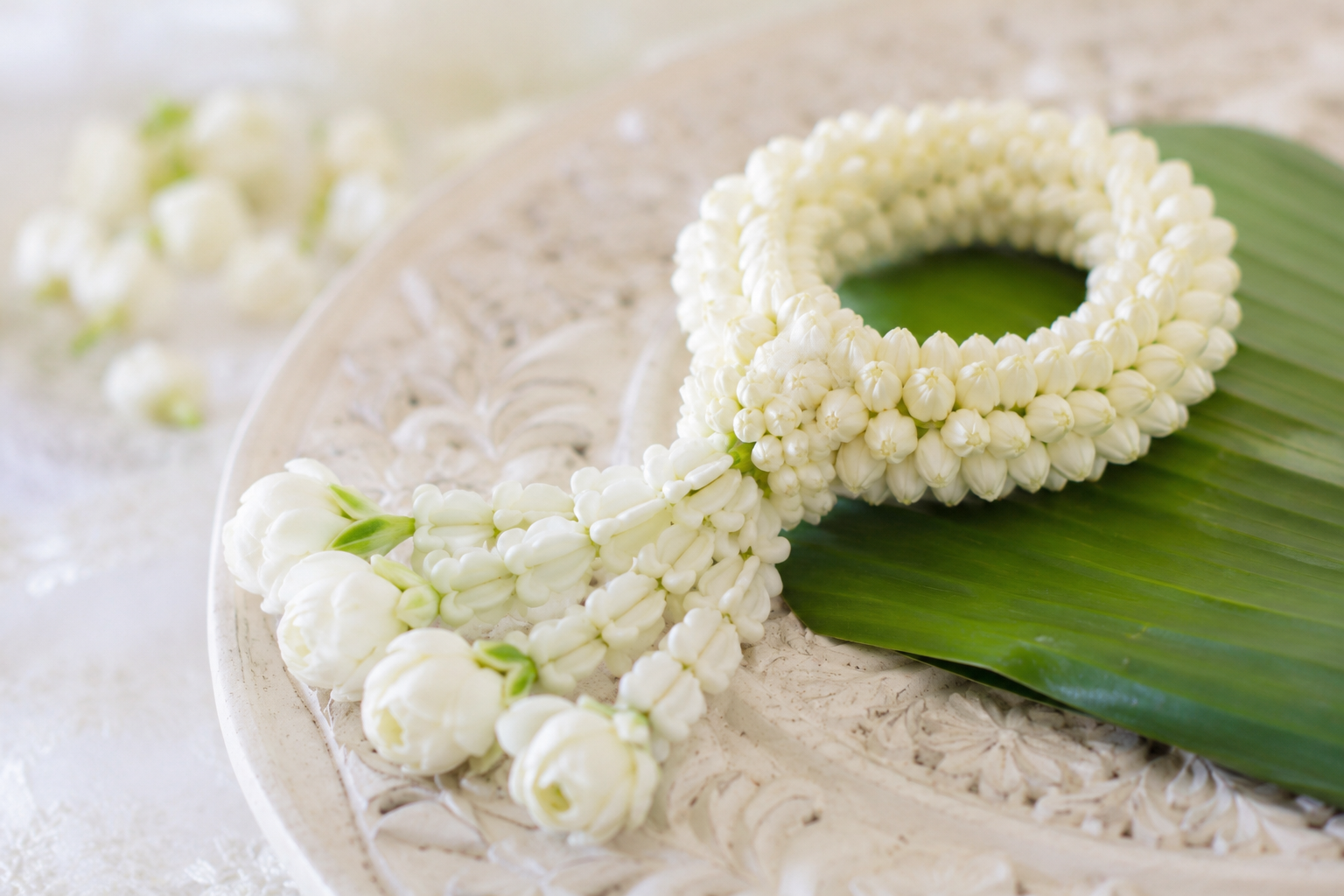
Jasmine is one of the most culturally meaningful flowers in Thailand.
Small white jasmine flowers are often woven into garlands and presented as expressions of respect, gratitude, and affection.
In Thailand, jasmine is especially connected with motherhood. Thai Mother’s Day falls on 12 August, the birthday of Her Majesty Queen Sirikit. White jasmine has been the symbolic flower of the day since 1976, and children often present jasmine garlands to their mothers as an expression of love and gratitude.
You can order flowers online for convenience. For jasmine and other traditional garland flowers, we still suggest visiting a local market when you can.
Looking closely, touching the blooms, and watching how each flower is added by hand with thread and needle—then kept cool in an ice bath—helps you appreciate how fresh and careful that work really is.
Its white colour is commonly associated with pure and sincere love, while its lasting fragrance represents a mother’s affection that continues regardless of time or distance.
A jasmine gift can communicate:
“Thank you for loving and caring for me.”
Jasmine is particularly appropriate for mothers, grandmothers, and respected family members. When you want a delivery bouquet with a similar white-and-sincere feeling, roses and lilies are a graceful choice.
5. Dao Rueang — a flower of brightness and prosperity
Thai name: ดอกดาวเรือง
Pronunciation: Dok Dao Rueang
English name: Marigold
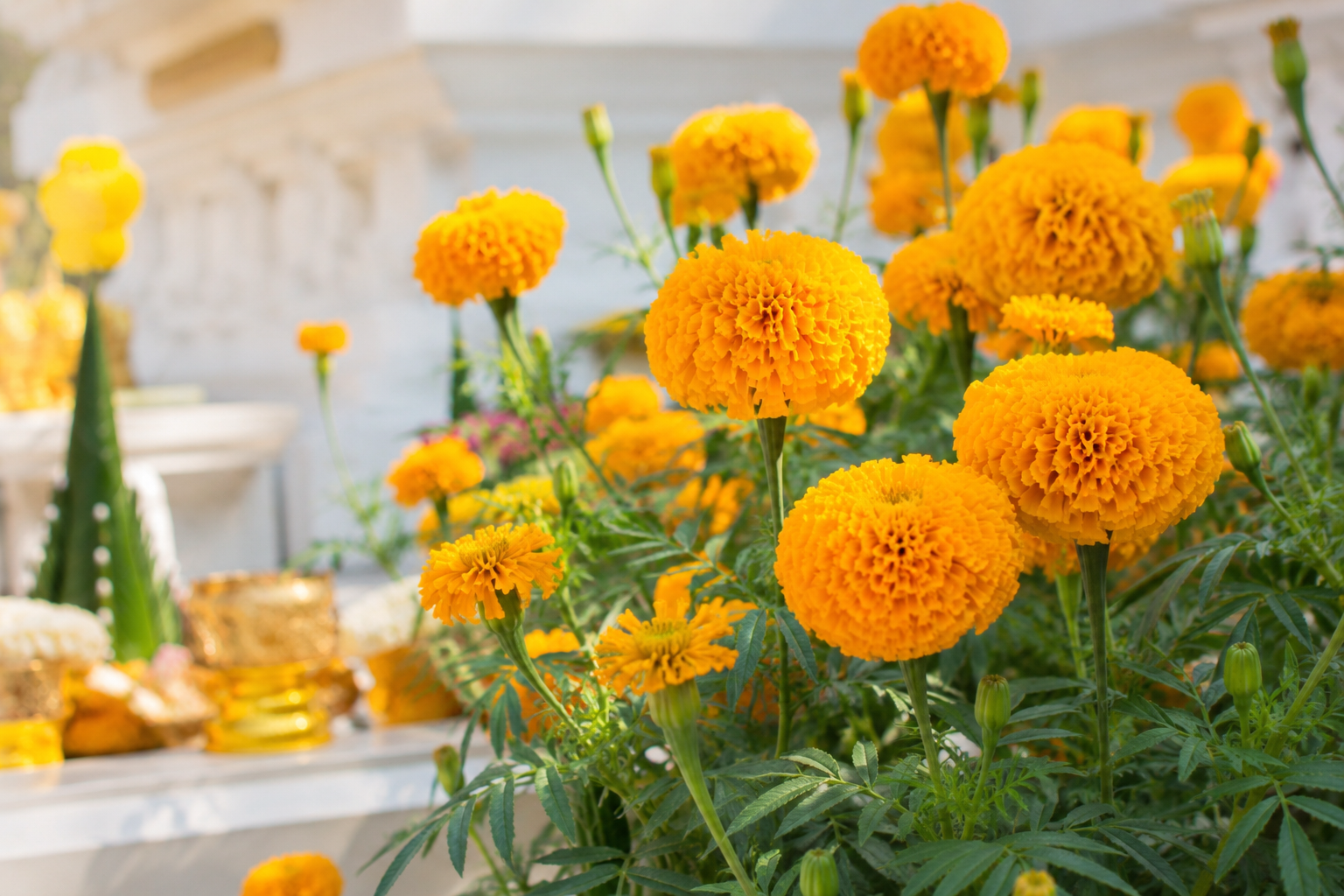
The Thai name Dao Rueang has an especially positive sound.
Dao means “star,” while rueang can suggest brightness, flourishing, success, or prosperity.
With its bright yellow and golden-orange colours, the marigold is commonly associated with positive energy, achievement, and good fortune in Thailand.
In daily Thai gifting, Dao Rueang is mostly ceremonial. Many locals do not treat it as an everyday romantic or friendship flower outside spiritual contexts. Visitors often notice marigolds at temples, and they also appear in supermarket gift sets—including at Tops—meant for offering to monks.
At local flower markets you will also see dense marigold garlands made by hand—bright rings of Dao Rueang with hanging white flower strands, kept fresh near coolers and ice.
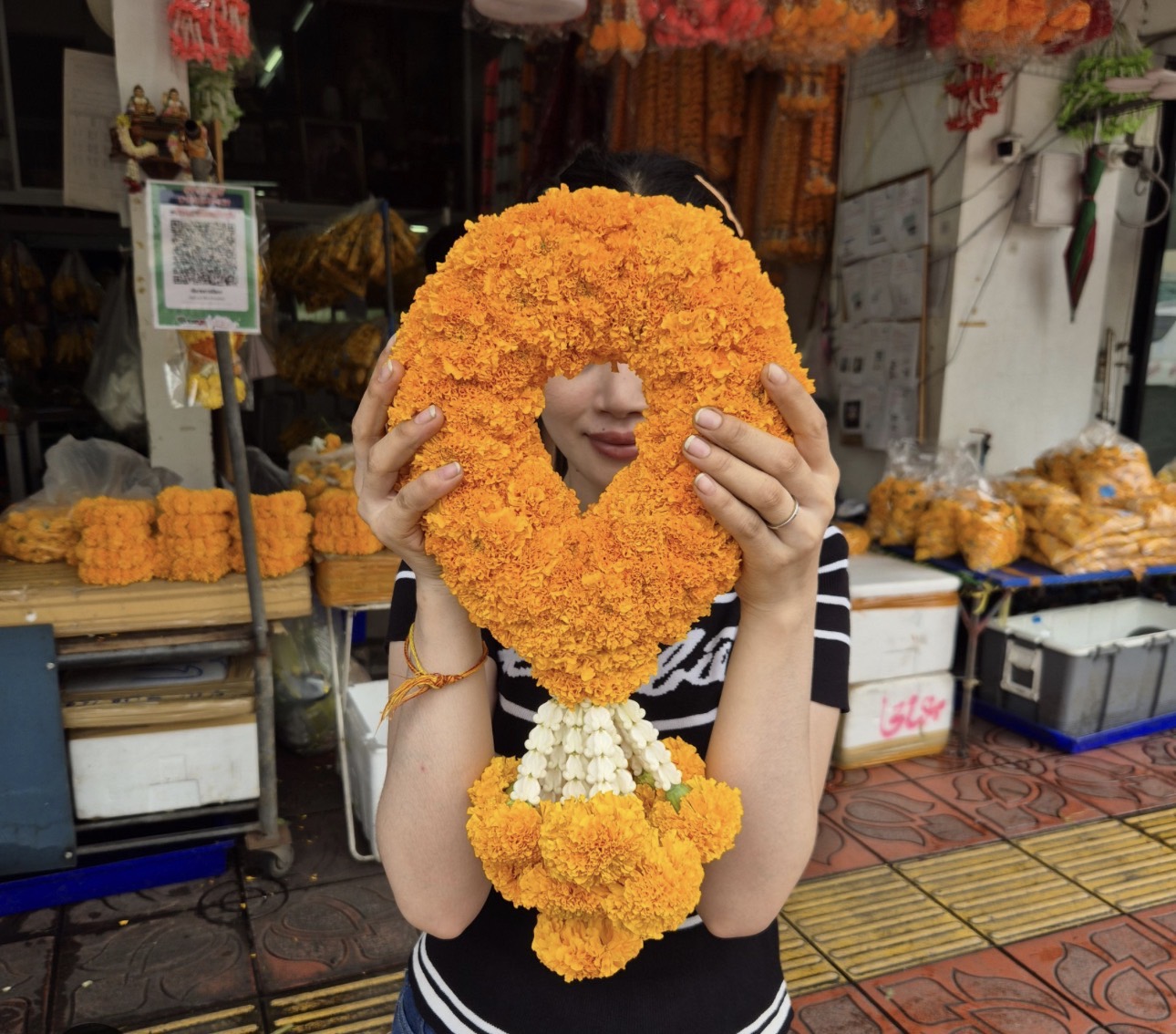
Marigolds are frequently used in religious offerings, ceremonies, and decorations. Their vivid colour still suits celebrations, openings, and wishes for success, as long as the occasion feels respectful of that ceremonial role.
The message may be interpreted as:
“May your life shine and prosper.”
Dao Rueang may be a meaningful flower for:
- Religious offerings and temple visits
- Sets prepared for monks
- Congratulations with a ceremonial tone
- A new business or opening
- Graduation
- A new home
- Career success
Bright yellow blooms such as sunflowers carry a similar celebratory energy in a modern delivery bouquet when you want brightness without the temple-offering association.
Are these ancient Thai flower meanings?
It is important to be careful when discussing the “language of flowers.”
Not every meaning found online represents an ancient Thai tradition. Some interpretations come from literal Thai names. Others developed from ceremonial use, religious customs, modern gifting culture, or Western flower symbolism.
For example:
- The connection between Dok Rak and love is strengthened by the Thai word rak.
- Baan Mai Roo Roi suggests endurance because the name means the flower does not fade and because the dried flower keeps its appearance.
- Jasmine’s connection with motherhood is an established modern Thai tradition tied to Mother’s Day on 12 August.
- Forget-me-not symbolism largely comes from international flower culture, even though the name has been translated into Thai.
- Dao Rueang is widely seen in temples and offerings; many locals treat it as ceremonial rather than an everyday gift flower.
Flower meanings can also differ between families, regions, and generations.
For that reason, flowers should not be treated like a strict secret code. Their meaning comes from a combination of language, appearance, tradition, and the personal message included with the gift.
Choosing a flower with a message
A flower becomes more meaningful when the sender explains why it was chosen.
A simple card can transform a beautiful flower into a personal message:
- Dok Rak: “For the love we share.”
- Baan Mai Roo Roi: “May our love never fade.”
- Ya Luem Chan: “Please remember that I am always thinking of you.”
- Mali: “Thank you for your pure and unconditional love.”
- Dao Rueang: “Wishing you happiness, success and a bright future.”
Need more wording ideas? See our gift card ideas with flowers.
The most important meaning is not always found in a dictionary. It is the meaning created between the person sending the flowers and the person receiving them.
Frequently asked questions
Do Thai flower names always match Western flower meanings?
Not always. Some Thai names are literal translations, while others grew from ceremonies, religion, or local gifting customs. Treat them as meaningful inspiration, not a fixed code.
Can I send a bouquet that matches these Thai flower messages?
Yes. You may not find every traditional bloom in a Western-style delivery bouquet, but you can choose roses, soft pinks, white-and-lily mixes, or bright yellow flowers and explain the meaning on the card.
What should I write on the flower card?
Keep it short and personal. One sincere sentence that names the feeling—love, remembrance, gratitude, or congratulations—is usually enough.
Are jasmine flowers only for Mother’s Day in Thailand?
Jasmine is especially linked with Thai Mother’s Day on 12 August (Queen Sirikit’s birthday), but it is also used more broadly for respect, gratitude, and pure affection toward family and elders.
Where can I see these traditional flowers in Chiang Mai?
Look for garland flowers at local markets such as Warorot (Kad Luang). Baan Mai Roo Roi often grows along countryside roadsides, while Dao Rueang is easiest to notice at temples and in offering sets.
Send flowers with a meaningful message
Thai flower names can inspire a gift that feels personal and culturally aware. Choose a bouquet that matches the feeling, add a short card, and let the meaning travel with the flowers—browse fresh bouquets or message us if you want help choosing.
Community
Reader comments
Share a tip or question about this guide. Comments are reviewed before they appear.
No comments yet. Be the first to share your thoughts.
Add your comment